
Quick answer
A house with rooftop solar water heating collectors cannot be reroofed around them. The collectors have to be disconnected and moved, then reconnected once the new roof is on. Because they are plumbed into the home hot water system, that is plumbing work for someone with solar thermal experience, scheduled around the roofer. Pyper Plumbing did this for a Woodinville homeowner who could not find another plumber to take the job.
What the job was
The home is in Woodinville. The roof carried solar heating collectors for the home hot water, and a new roof was planned. The homeowners called around for a plumber who could detach the collectors from the system so the roof could be replaced, and then put them back afterward. They could not find another plumber who could take it on.
Pyper Plumbing came out, detached the collectors before the reroof, and reattached them once the new roof was finished. That is the whole story, and we think it is worth telling because it is a job any plumber in Washington who is asked about rooftop solar water heating should be ready for.
What these collectors are
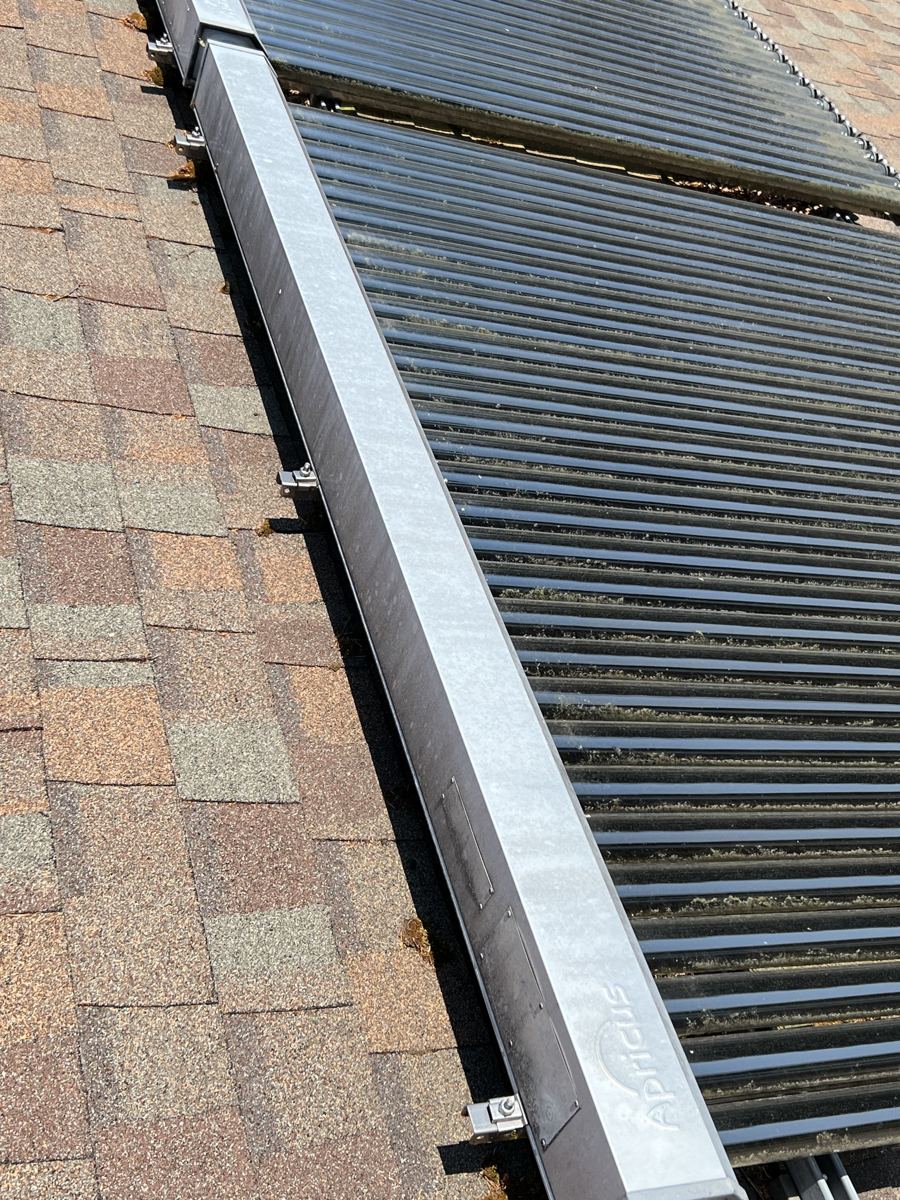
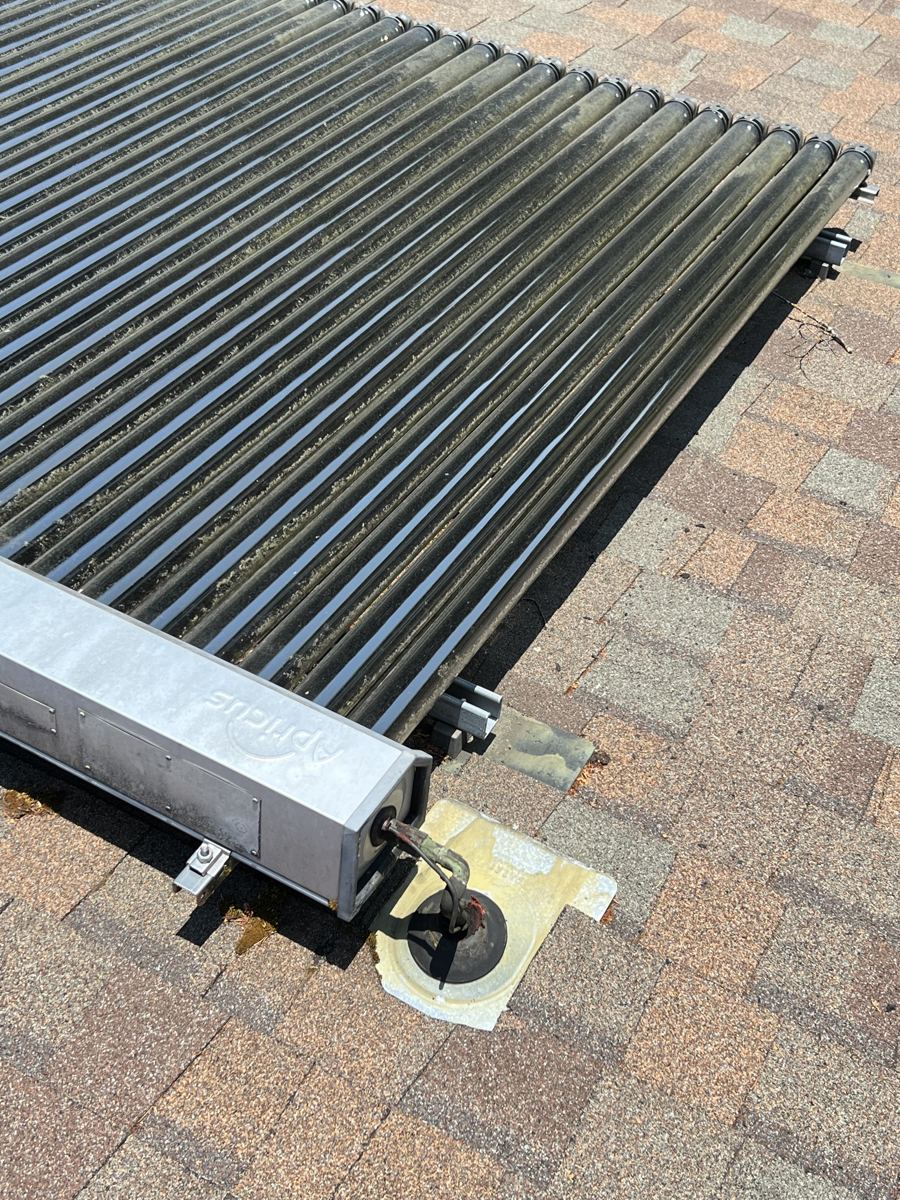
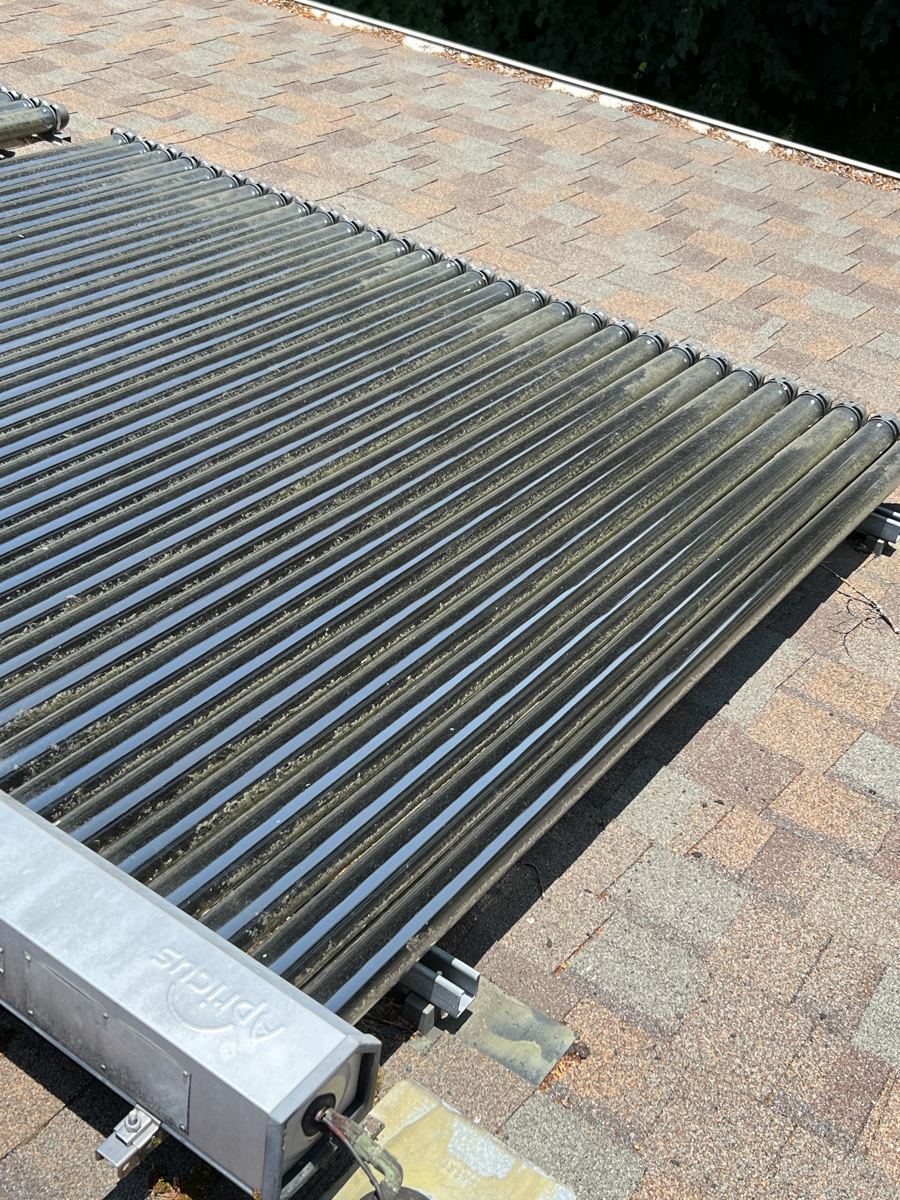
The collectors in the photos carry the Apricus name on the manifold box and use rows of glass tubes. According to the manufacturer, Apricus evacuated tube collectors have a vacuum between two layers of glass in each tube, a copper heat pipe inside each tube, and an insulated manifold box that holds a copper header pipe. Each heat pipe plugs into a dry socket on the header, and a circulation pump moves liquid through the collector to carry the heat down to the solar storage tank.
In plain terms: the roof catches the sun, the liquid in the loop carries the heat to a tank inside, and the pipes that make that loop run through the roof. That loop is plumbing, and it is connected to your hot water.
Why a reroof forces the question
Roofing goes on the surface the collectors are sitting on. A roofer cannot lay new roofing under mounted collectors, and a roofer should not be pulling pipe fittings on a pressurized loop. One roofing company describing electric solar panels says the panels have to come off before roofing starts, are stored, and are reattached when the new roof is done. Thermal collectors are a different system, but the logic is the same: they come off, the roof is done, they go back.
The difference is the plumbing. Electric panels have wires. Solar hot water collectors have pipes carrying fluid, which is why the homeowner in Woodinville needed a plumber and not only a roofer.
Why this belongs with a plumber
The U.S. Department of Energy says tasks like ladder work, roof walking and soldering on a solar water heating system should be done by a professional service for safety reasons. A national lab guide adds that these systems are pressurized and can hold very hot water, and that only trained, authorized providers should connect or disconnect pipes or components. It names a plumber or HVAC technician with solar water heating experience as the right kind of person for repairs.
Disconnecting is the easy half of the sentence. Reconnecting means the loop has to be tight, insulated and ready to run again, so the system does not lose its heat or leak into the roof or the house.
What the photos show
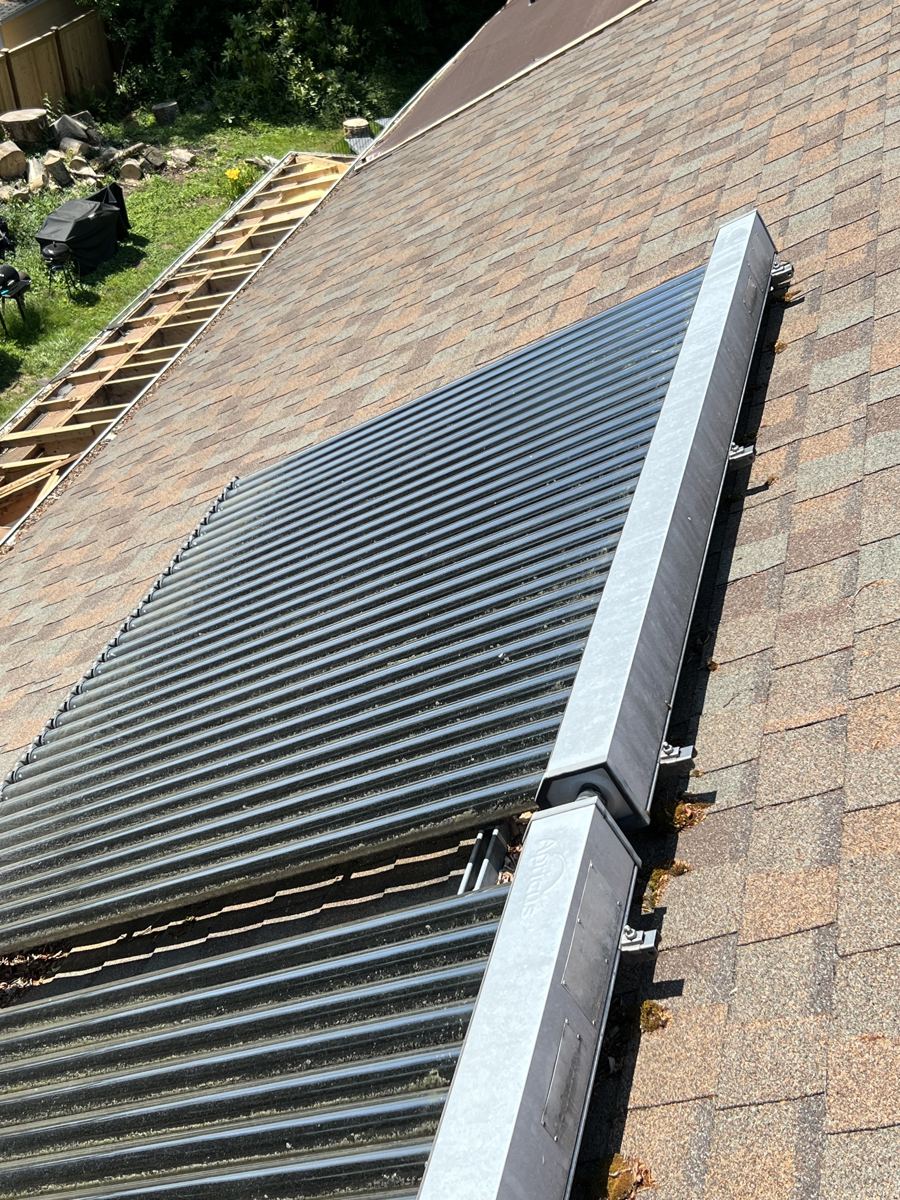
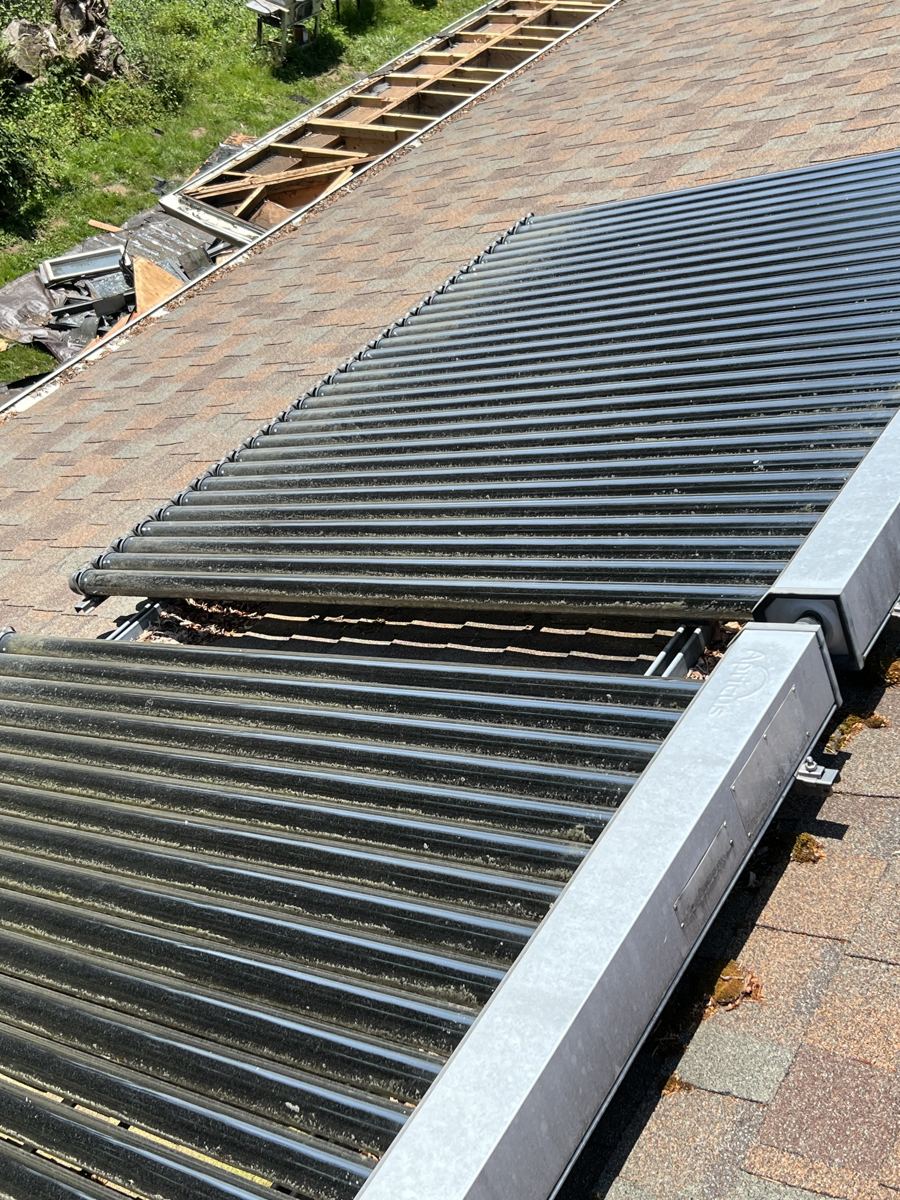
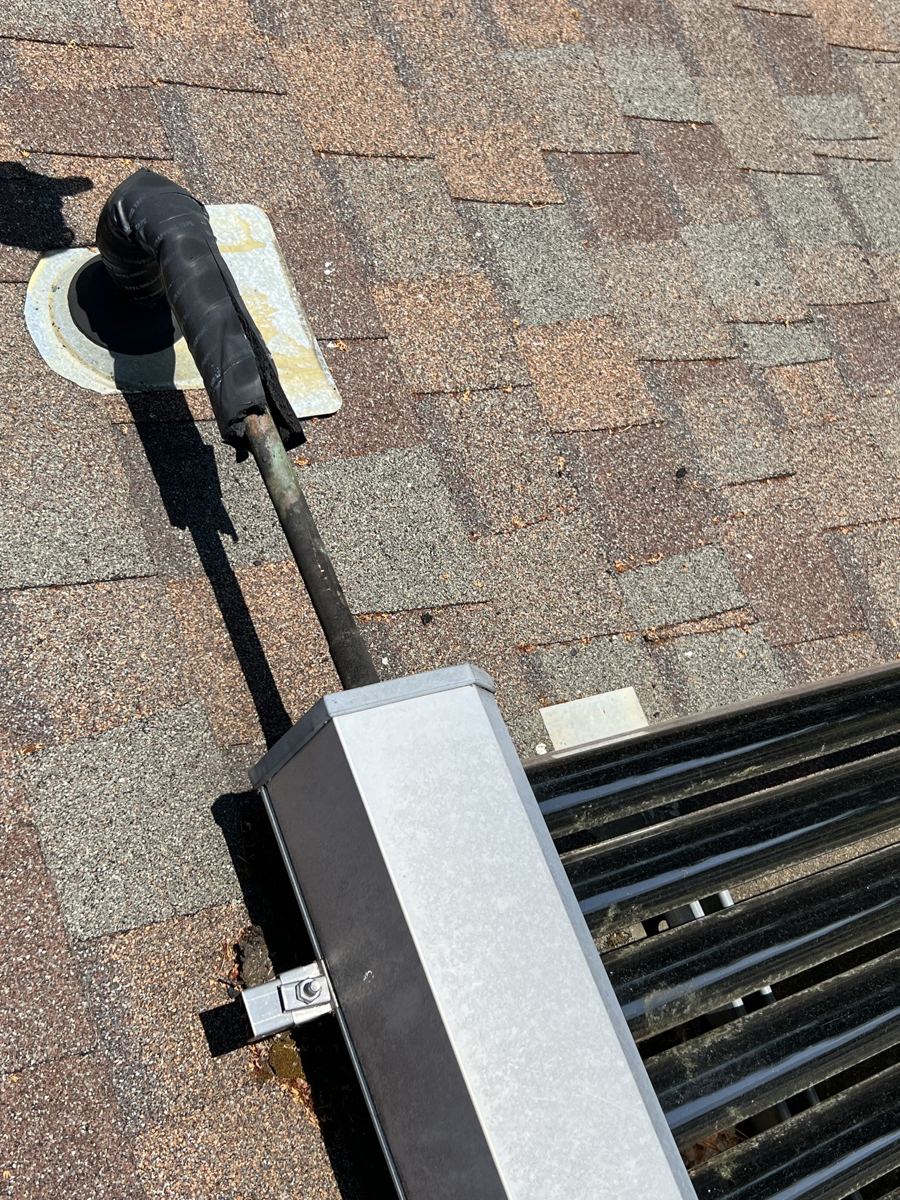
The photos are from the Woodinville roof. They show rows of glass tubes on asphalt shingles, manifold boxes along the edges, and a copper line leaving the manifold and passing through a flashed roof penetration with black pipe insulation on it. In two photos a strip of open roof framing is visible next to the collectors, which is the reroof under way.
The roof penetration is the detail that makes this a two-trade job. Any pipe that goes through a roof depends on its flashing, and a reroof touches that flashing. Roofer and plumber both have to get their part right, and the order they work in matters.
Fluid and freeze protection
The Department of Energy says solar water heating systems in climates with freezing weather need either antifreeze in the collector loop or draining of the loop. It says the common antifreeze is propylene glycol, that ethylene glycol is never acceptable because of toxicity, and that antifreeze degrades over time and should be tested by a solar professional. It also says the antifreeze is usually replaced every 3 to 5 years.
Whenever a collector loop is opened for work, the fluid and its freeze protection are part of the conversation. Which fluid your system uses, and what has to happen to it during a reroof, depends on how your system was built. That is a question for your installer manual and your plumber.
What to line up before a reroof
If your roof has solar hot water collectors, plan the plumber before you book the roofer, not after.
- Tell both the roofer and the plumber about the collectors when you ask for quotes.
- Find the installation manual. For Apricus collectors, the manufacturer posts installation manuals on its website.
- Ask for a written estimate before work starts, as the Department of Energy advises for solar water heating work.
- Ask the manufacturer or installer how the work could affect your warranty, and keep a written log of the work. A national lab guide says a maintenance log helps preserve warranties, and that collector warranties typically run 5 to 10 years.
- Book the plumber for two visits: one to disconnect before the roofers start and one to reconnect after they finish.
- Take photos of the roof, collectors and pipe penetrations before anything is touched.
Why we wrote this one
Plumbers who have never worked on rooftop solar hot water may not know what the job involves, and a homeowner with a reroof on the calendar can end up calling down a list with no luck. We think every Washington plumber should at least know what the job is, who it involves, and how to say yes or no honestly.
If you have collectors on your roof and a roof replacement ahead, call Pyper Plumbing and tell us what you have. We will tell you plainly whether it is something we can take on.
Common questions
Can the roofer just remove solar water heating collectors?
Roofers can coordinate the work, but collectors are connected to pipes carrying fluid. Federal energy guidance says pipe connections on these systems should be handled by trained, authorized providers, such as a plumber with solar water heating experience.
Does the collector loop have to be drained for a reroof?
It depends on how the system is built and what your manual says. Ask the installer or the manufacturer, and ask your plumber before the roofer is scheduled.
Will detaching the collectors affect my warranty?
Ask the manufacturer or installer before any work. A national lab guide says keeping a maintenance log helps preserve warranties, and it says collector warranties typically run 5 to 10 years.
Sources
Facts in this guide come from the following references. Local rules and manufacturer instructions can differ, so follow your utility and your equipment manual.
- Apricus: Evacuated Tube Solar Collectors (product description)
- Apricus: downloads (installation manuals)
- U.S. Department of Energy: Solar Water Heating System Maintenance and Repair
- Pacific Northwest National Laboratory: O&M Best Practices, Solar Water Heating Systems
- K Post Company: Solar panel removal and reinstallation for roof replacement
This guide is general information, not a substitute for an on-site inspection. If you smell natural gas, leave the building and call 911 or your gas utility. Pyper does not perform gas line work.
